
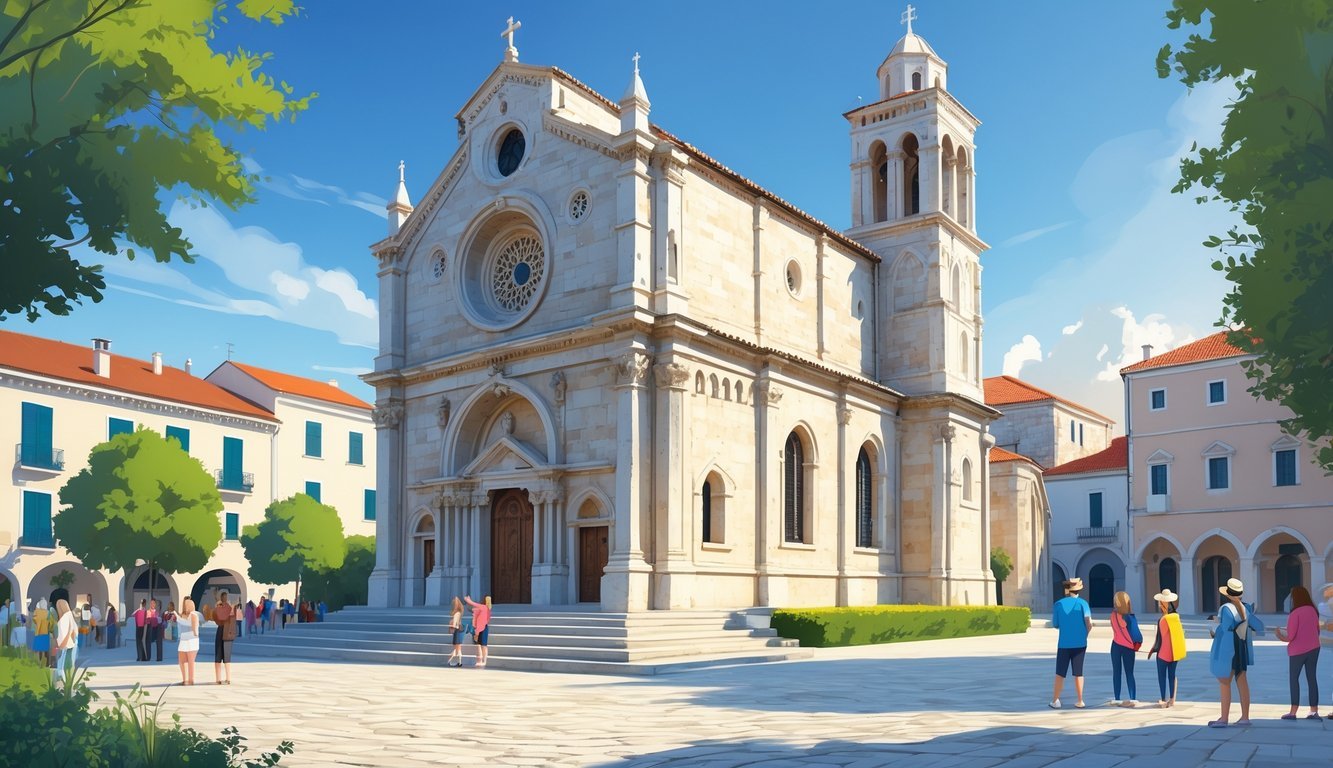
Zadar sits on Croatia’s Adriatic coast, where Roman ruins and Venetian walls meet modern art installations and seaside promenades. The city offers a calm mix of ancient history and relaxed coastal atmosphere that attracts travelers interested in culture, architecture, and natural beauty.
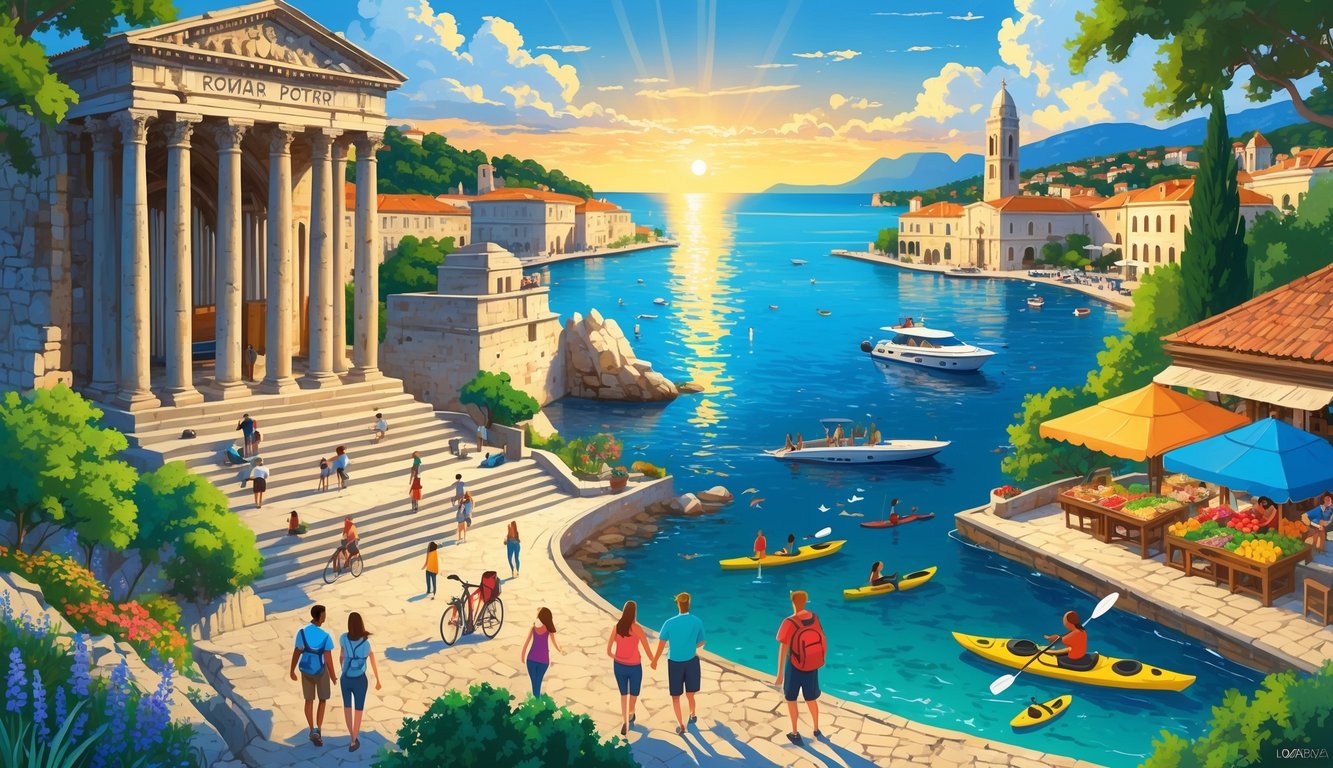
The best things to do in Zadar combine history, art, and the sea—offering experiences that blend Croatia’s rich past with its lively present.
From the rhythmic tones of the Sea Organ to panoramic bell tower views and peaceful harborside walks, every corner of Zadar has something that captures attention. Its compact size makes exploration easy, inviting visitors to move slowly, appreciate details, and enjoy time by the water.
1. Explore the Sea Organ and listen to its unique musical sounds
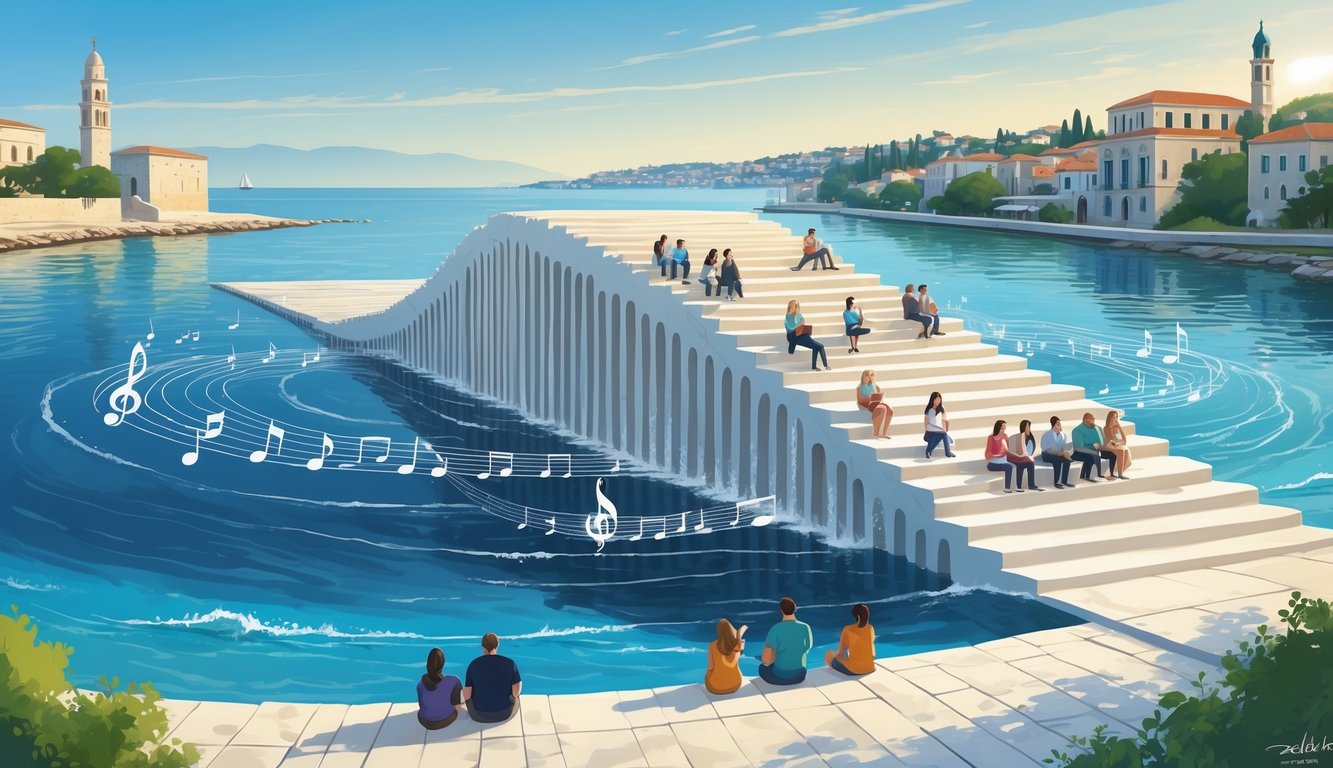
Along Zadar’s waterfront, the Sea Organ combines design and nature in a way few places do. Built into white stone steps descending into the Adriatic, this installation transforms the motion of waves into sound. Each gust of wind and every ripple brings a slightly different tone, creating music that never repeats itself.
Architect Nikola Bašić designed the structure in 2005 as part of Zadar’s postwar revival. Beneath the promenade, a series of 35 pipes and cavities form a hidden instrument. As water and air move through them, the steps above release soft, harmonic notes that seem to breathe with the sea itself.
Visitors often sit along the steps in the late afternoon, listening as the rhythm shifts with the tide. The sounds are gentle and unpredictable—sometimes deep and resonant, sometimes light and airy. It feels less like a performance and more like a quiet dialogue between the city and the ocean.
Located beside another modern installation, the “Greeting to the Sun,” the Sea Organ invites reflection as much as admiration. Watching the sunset while listening to its tones offers one of the most distinctive experiences in Croatia, blending art, architecture, and nature into a single moment on the edge of the Adriatic.
2. Visit the Sun Salutation light installation at sunset
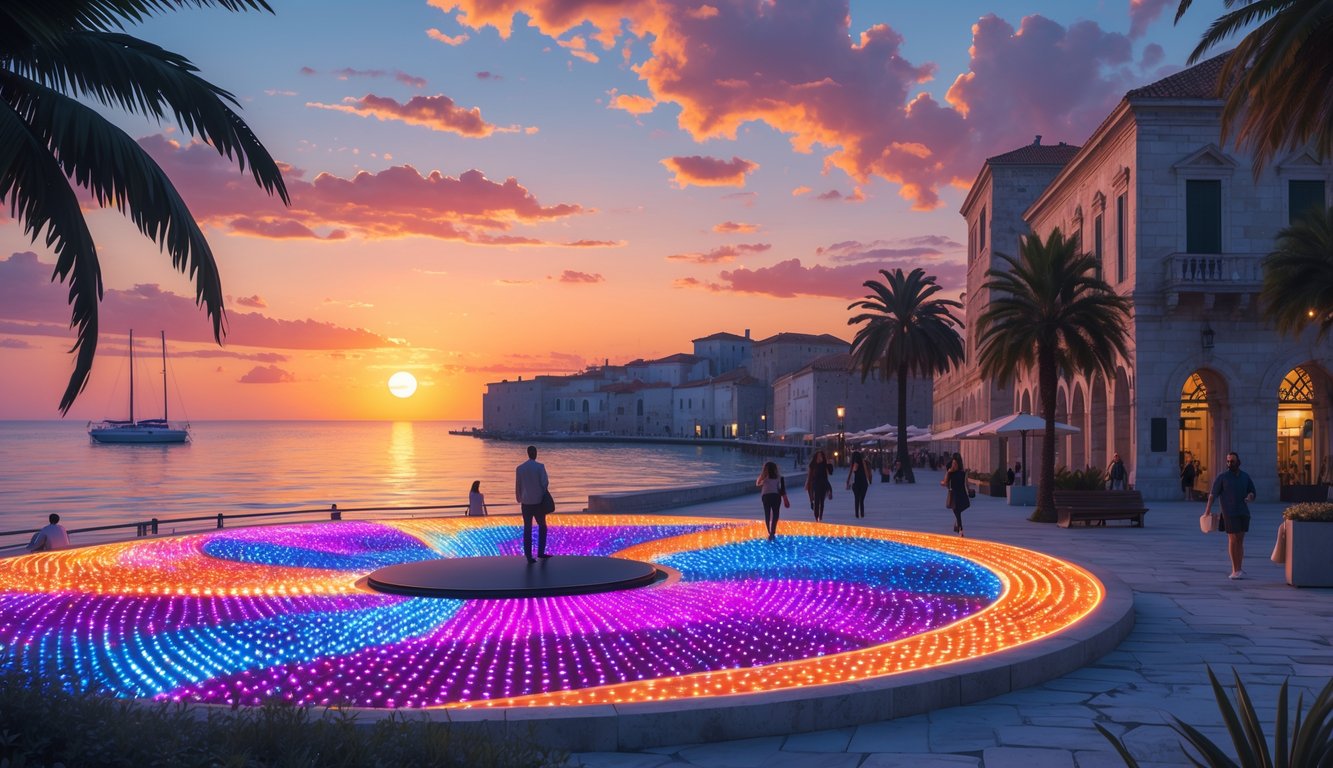
Located at the tip of Zadar’s western promenade, the Sun Salutation—also called the Greeting to the Sun—draws visitors each evening to watch light blend with sea and sky. Designed by architect Nikola Bašić, the circular installation is built from 300 glass panels embedded with solar cells that collect sunlight during the day. As darkness falls, the surface lights up in soft, shifting patterns powered by the stored energy.
The best time to arrive is just before sunset. From this spot, the view captures the Adriatic stretching out toward distant islands, while the sky slowly changes color. As the last rays fade, the lights begin their quiet display, creating a calm yet captivating atmosphere.
Crowds gather along the Riva promenade, many moving from the nearby Sea Organ to enjoy both sights. The tones of the organ mix with the rhythm of the lights, forming a sensory pairing unique to Zadar. For photographers, the early dusk offers the most balanced light—vivid yet understated.
Visitors often stay long after sundown. The installation continues its slow movement of color, reflecting on the surrounding stone and sea. It’s a modern expression of harmony between urban space and natural energy, and one of the city’s most distinctive evening experiences.
3. Walk through Zadar’s historic Old Town
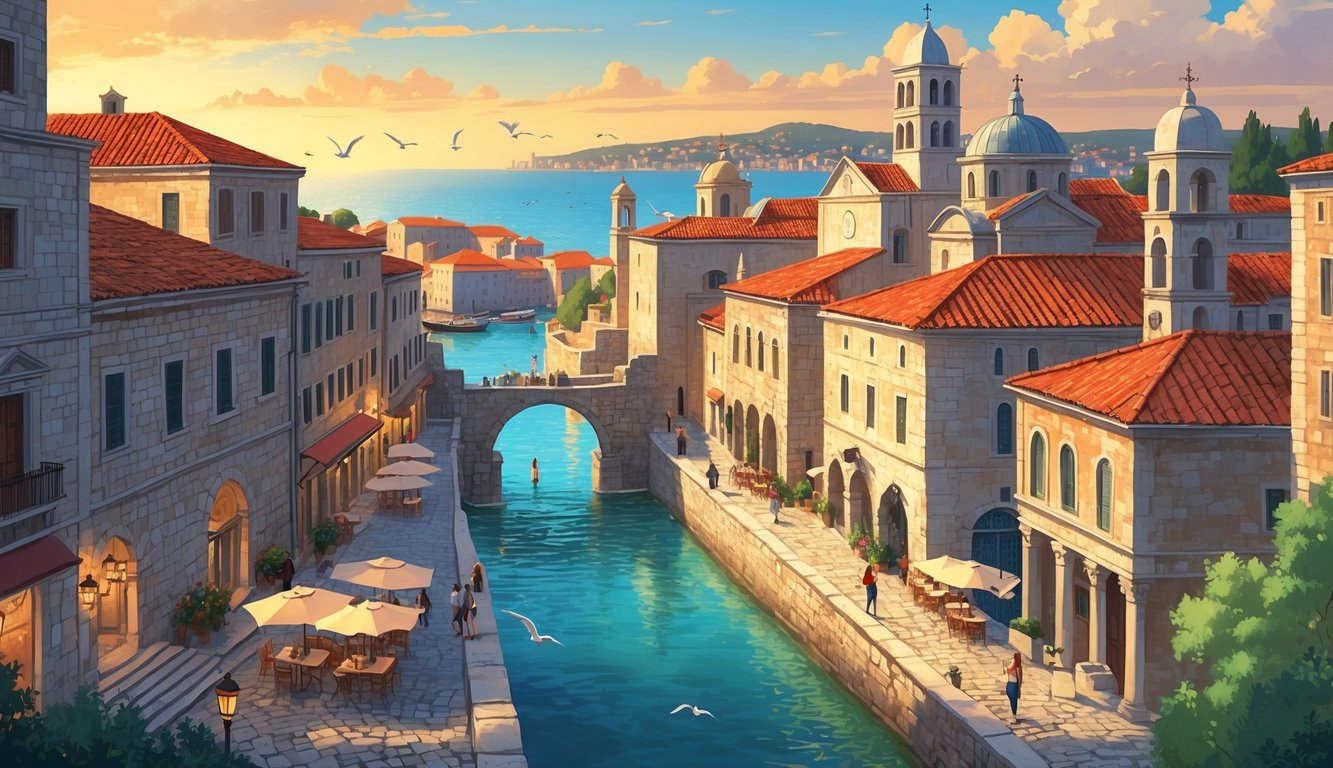
Zadar’s Old Town sits on a narrow peninsula, enclosed by ancient walls that once protected it from invaders.
Visitors enter through the Land Gate, a grand stone arch built in the 16th century, and immediately step into a world layered with Roman, medieval, and Venetian history. Each turn of the narrow cobblestone streets reveals another trace of the city’s past.
The Roman Forum, dating back to the 1st century BCE, anchors the Old Town with its weathered columns and open square.
Nearby stands the Church of St. Donatus, one of Croatia’s most recognizable landmarks. Its circular shape and plain stone facade reflect both early medieval architecture and the city’s long-standing religious heritage.
As people wander toward the harbor, the sound of the Sea Organ drifts through the air—a modern installation that uses waves to create soft, natural tones.
A short walk away, the Greeting to the Sun captures daylight through solar panels, glowing softly after sunset. These details blend the city’s old and new identities in one compact space.
Small cafés and family-owned shops line the main streets such as Široka Ulica (Kalelarga). Locals sip coffee while musicians play nearby, adding a calm rhythm to the day.
Despite its centuries of change, the Old Town remains walkable, vibrant, and best explored at a slow pace that allows each stone and sound to speak for itself.
4. Tour the Roman Forum ruins
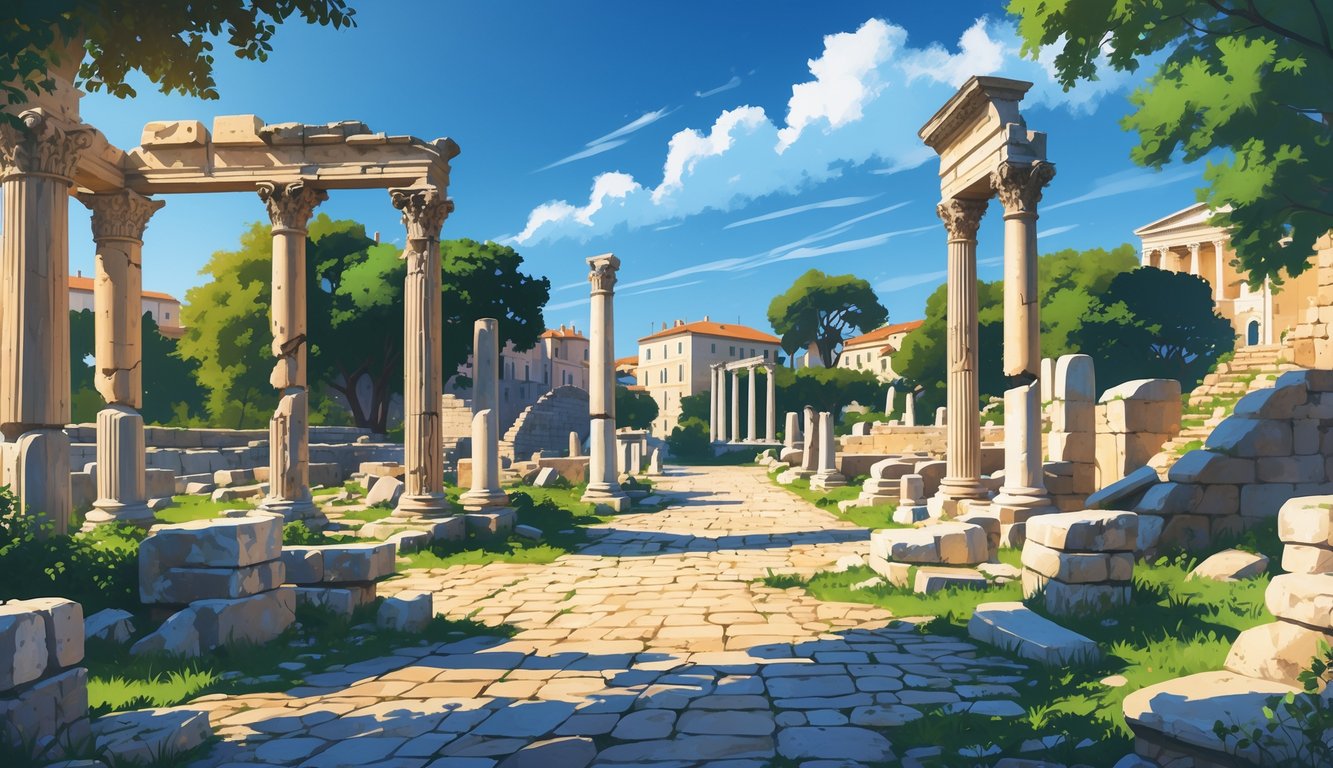
At the center of Zadar’s Old Town lies the Roman Forum, an archaeological site that reflects the city’s ancient role within the Roman Empire.
Built under Emperor Augustus, the complex once served as the main public square—complete with temples, porticos, and bustling market stalls. Today, the columns and carved stones that remain reveal the Forum’s original scale and purpose.
Visitors can walk freely among the ruins and observe how layers of history overlap, from Roman foundations to medieval structures built later on the same ground.
The site has no entry fee, allowing quiet moments of exploration at any time of day. The nearby Church of St. Donatus, constructed with stone from the Forum, stands as a visible reminder of how the city reused its own past.
Local guides often include the Forum on their walking tours, combining it with visits to St. Anastasia’s Cathedral or the Sea Organ along the waterfront.
These tours help visitors understand how Zadar’s urban plan still follows the grid of its Roman origins. Standing where citizens once gathered for trade and civic life, one can clearly trace the outline of a town that continues to evolve while never losing sight of its roots.
5. Visit St. Donatus Church
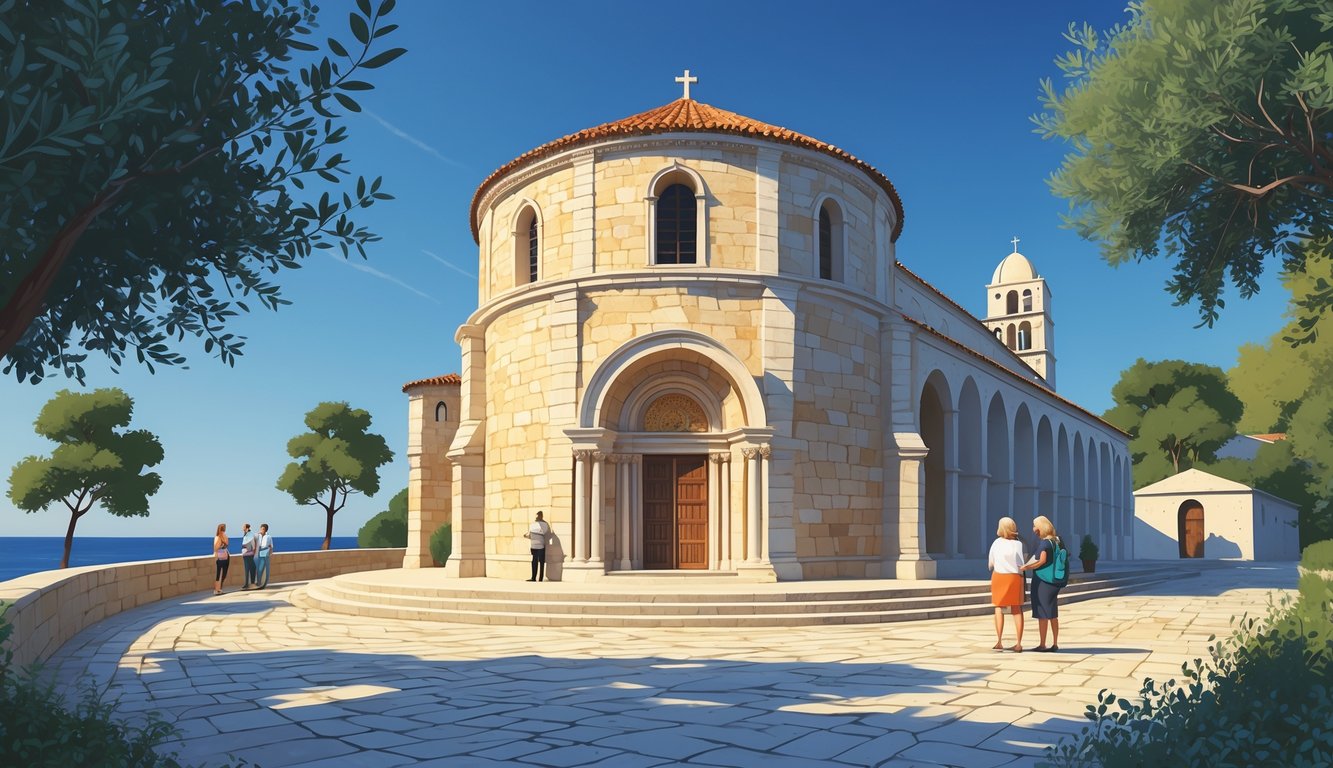
Standing in the heart of Zadar’s Old Town, the Church of St. Donatus commands attention with its circular stone form and simple pre-Romanesque design.
Built in the 9th century, it rests directly on the remains of the ancient Roman forum, merging early medieval and classical layers of history in one compact space.
The structure is about 27 meters tall and 22 meters wide, giving it a solid and symmetrical presence. Its double interior and thick columns create an austere atmosphere that highlights its age and preserved craftsmanship.
The church bears the name of Bishop Donatus, who oversaw its construction and influenced its resemblance to early Carolingian chapels linked to Charlemagne’s court.
Although no longer used for religious services, the site has a long cultural role. From the late 19th century to the mid-20th century, it housed the Zadar Archaeological Museum.
Today, it serves as a concert venue celebrated for its clear acoustics, particularly during the “Musical Evenings of St. Donatus,” a festival of medieval and Renaissance music.
Visitors can enter daily, usually in the morning and early afternoon. The modest admission fee supports preservation efforts.
Inside, faint light filters through narrow windows, highlighting austere stone walls and fragments of Roman columns embedded in the floor—subtle details that show how Zadar’s past layers coexist within one building.
6. Climb the Bell Tower of St. Anastasia Cathedral
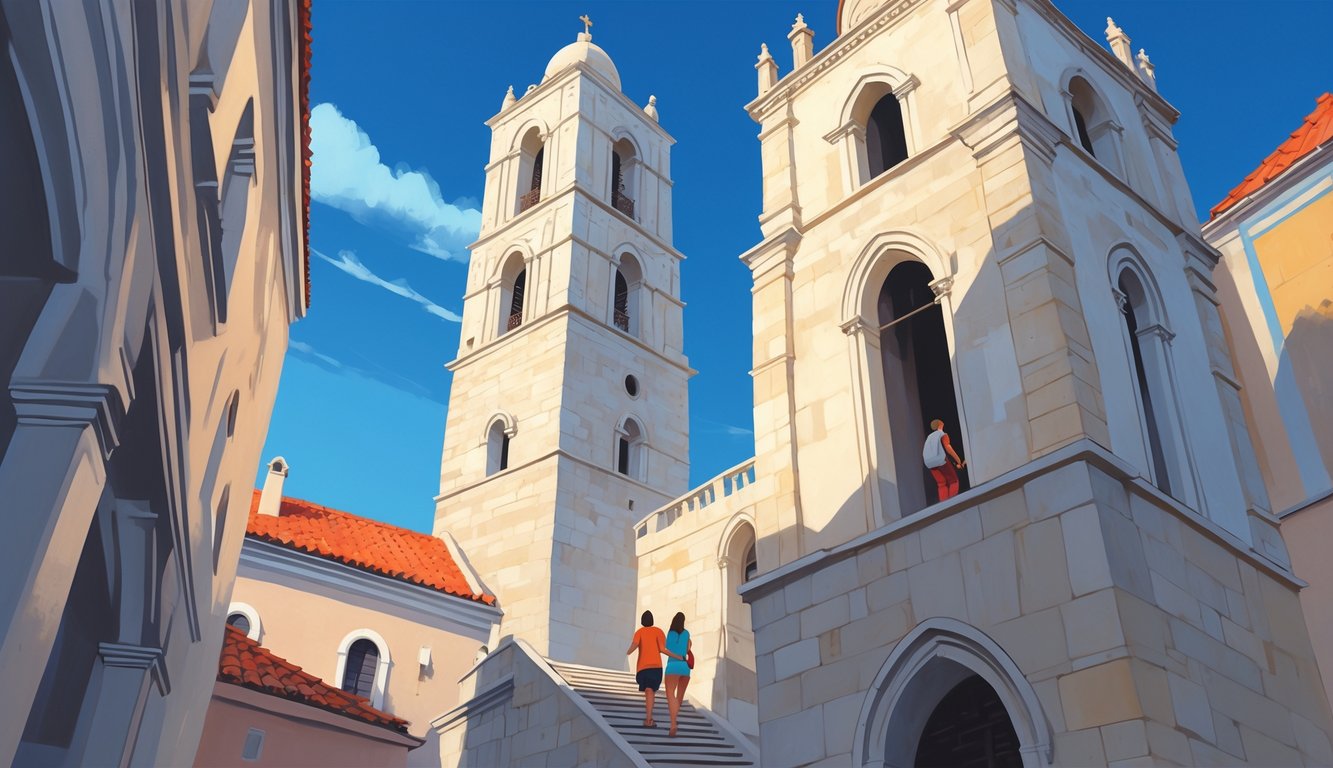
Rising above Zadar’s Old Town, the Bell Tower of St. Anastasia Cathedral offers one of the most panoramic views in the city.
Located beside the Romanesque cathedral itself, the tower’s simple stone façade gives little hint of the sweeping 360‑degree outlook waiting at the top. Visitors can spot the Adriatic Sea, the islands beyond, and the tiled roofs that define the historic center.
The climb involves a narrow staircase with roughly 180 steps. The stairs are steep in places, but handrails make the ascent manageable for most visitors who take their time.
Once above the final landing, the platform opens to fresh air and quiet, broken only by the chime of nearby bells. Many find this short effort worthwhile for the calm perspective it provides over a busy waterfront.
Construction of the current tower stretched across several centuries.
The base dates to the 15th century, while the upper levels were completed in the late 19th century under the design of the English architect Thomas Graham Jackson.
This mix of medieval and 19th‑century work gives the structure its distinct profile among Zadar’s skyline.
Entry usually requires a small fee, which helps maintain the site. Morning visits offer softer light and cooler weather, but the late‑afternoon sun often paints the city in warmer tones.
For travelers exploring Zadar’s historic core, the tower serves as both a landmark and a vantage point to understand the city’s past and its coastal setting.
7. Explore the Archaeological Museum
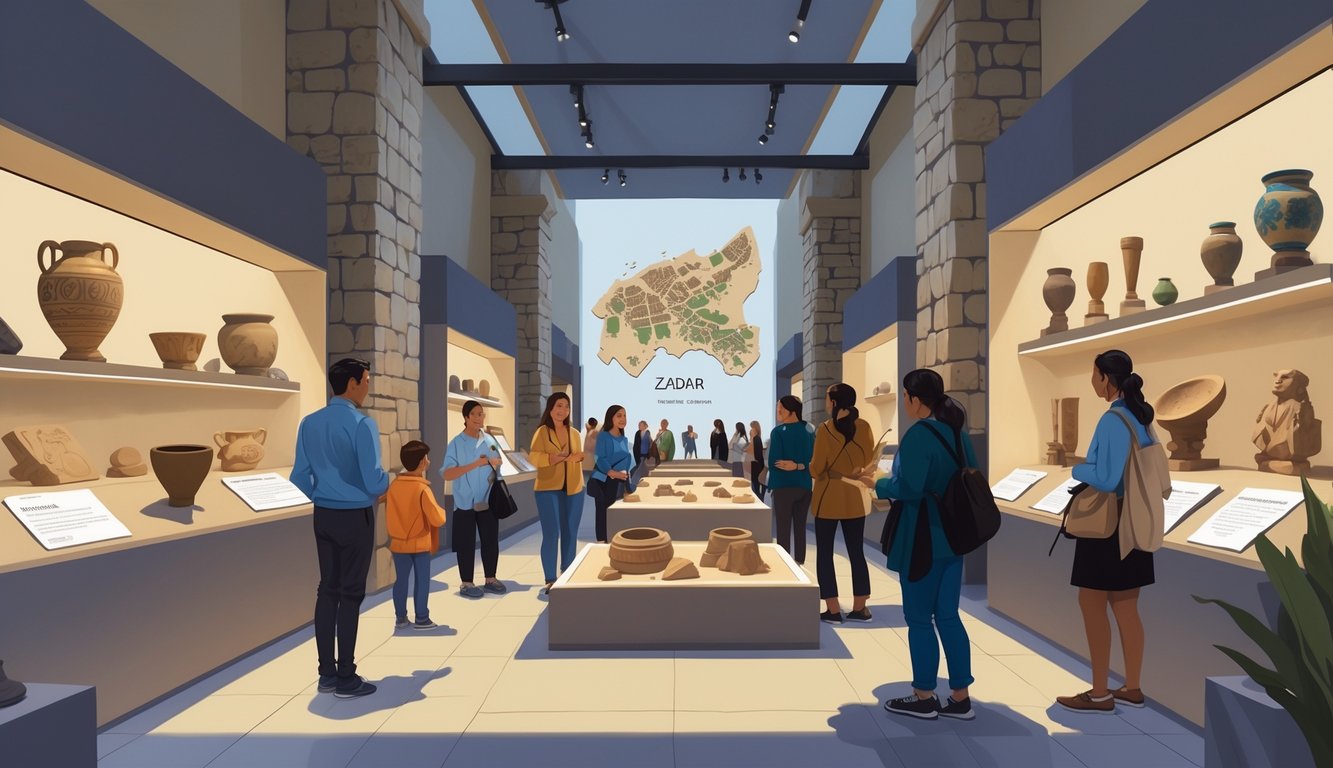
Located beside Zadar’s Roman Forum, the Archaeological Museum offers a focused look at the region’s long and layered past.
Founded in 1832, it stands as Croatia’s second oldest museum, housing more than 100,000 artifacts that trace local history from prehistoric times to the late medieval era.
Visitors move through exhibits arranged by period, beginning with stone tools and pottery from the Palaeolithic and Neolithic ages.
Roman sculptures, coins, and fragments from ancient settlements show how the city evolved under empire rule. Later rooms display early Christian art and medieval relics that reflect the region’s gradual shift in culture and faith.
Every floor reveals another stage in Dalmatia’s development. The upper levels highlight discoveries from nearby islands such as Pag and Rab, connecting inland and coastal histories.
Glass cases and clear labeling make the displays easy to follow, even for those with limited background in archaeology.
The museum sits in a modern building designed to face the remains of the ancient Forum, bridging old and new in one view. Its proximity to the Church of St. Donatus and other landmarks allows visitors to see artifacts where they originated.
For anyone seeking context before exploring Zadar’s ruins outdoors, this museum provides a quiet, structured introduction.
8. Stroll along the beautiful Riva Harbor
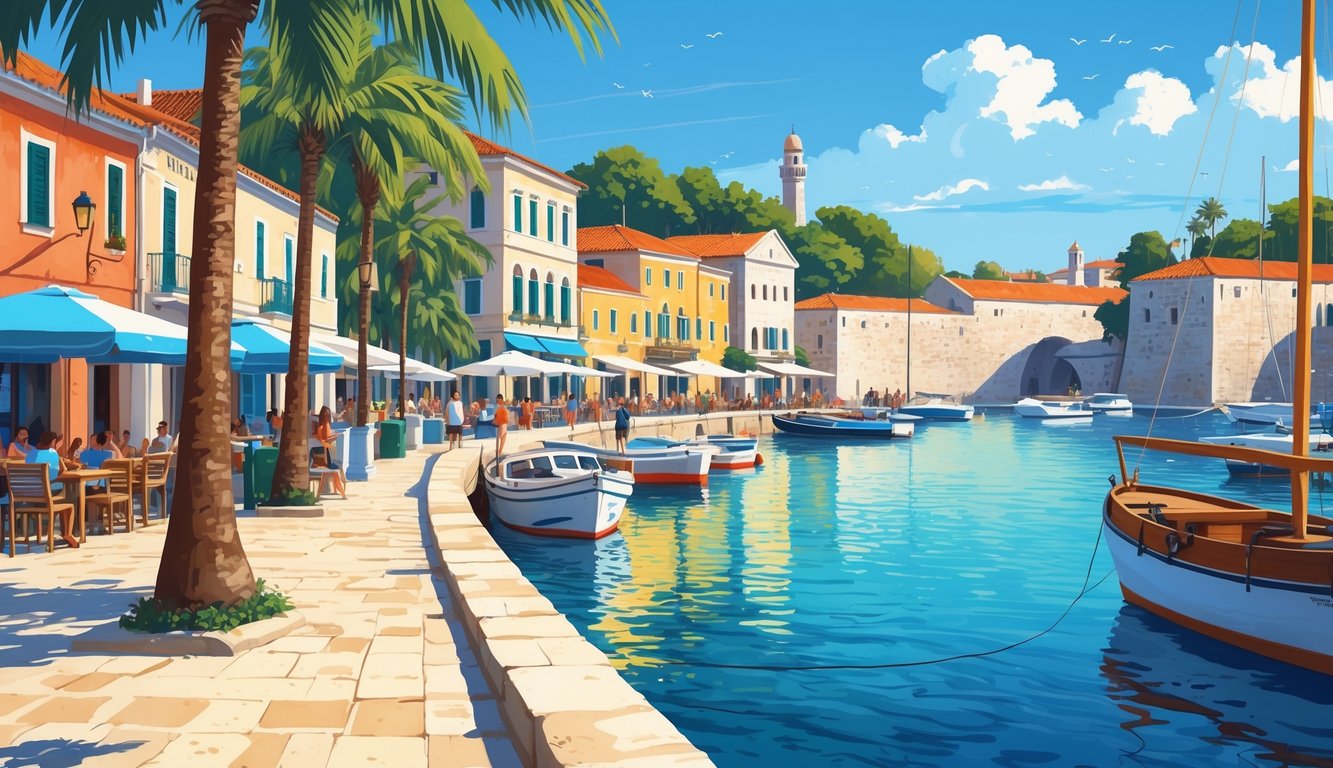
The Riva Harbor forms the heart of Zadar’s waterfront life.
Stretching along the old town’s western edge, it offers open views across the Adriatic Sea and the neighboring islands. Visitors often find it a peaceful spot to begin or end their day.
The promenade’s wide stone path makes it ideal for walking, cycling, or simply sitting on a bench while watching the boats.
Locals and travelers mingle here, especially in the evening when the air cools and the light softens. The space feels both vibrant and calm, depending on the hour.
Many visitors pause near the famous Sea Organ and the Greeting to the Sun installations at the promenade’s southern end.
The subtle sounds of the organ mix with the rhythmic movement of waves, adding a unique element to a simple walk.
Cafés and small restaurants line parts of the waterfront, providing easy access to coffee, gelato, or a light meal.
The sunset, often described as one of the best on the Adriatic coast, draws quiet crowds. People gather to watch the horizon glow before night settles, marking a tranquil close to the day.
The Riva Harbor reflects Zadar’s balance between history and modern life. It maintains the scale and style of a historic port while supporting a contemporary pace.
Whether one passes through briefly or lingers for hours, the promenade offers a clear view of the city’s character and coastal charm.
9. Discover Zadar’s city walls and defense towers
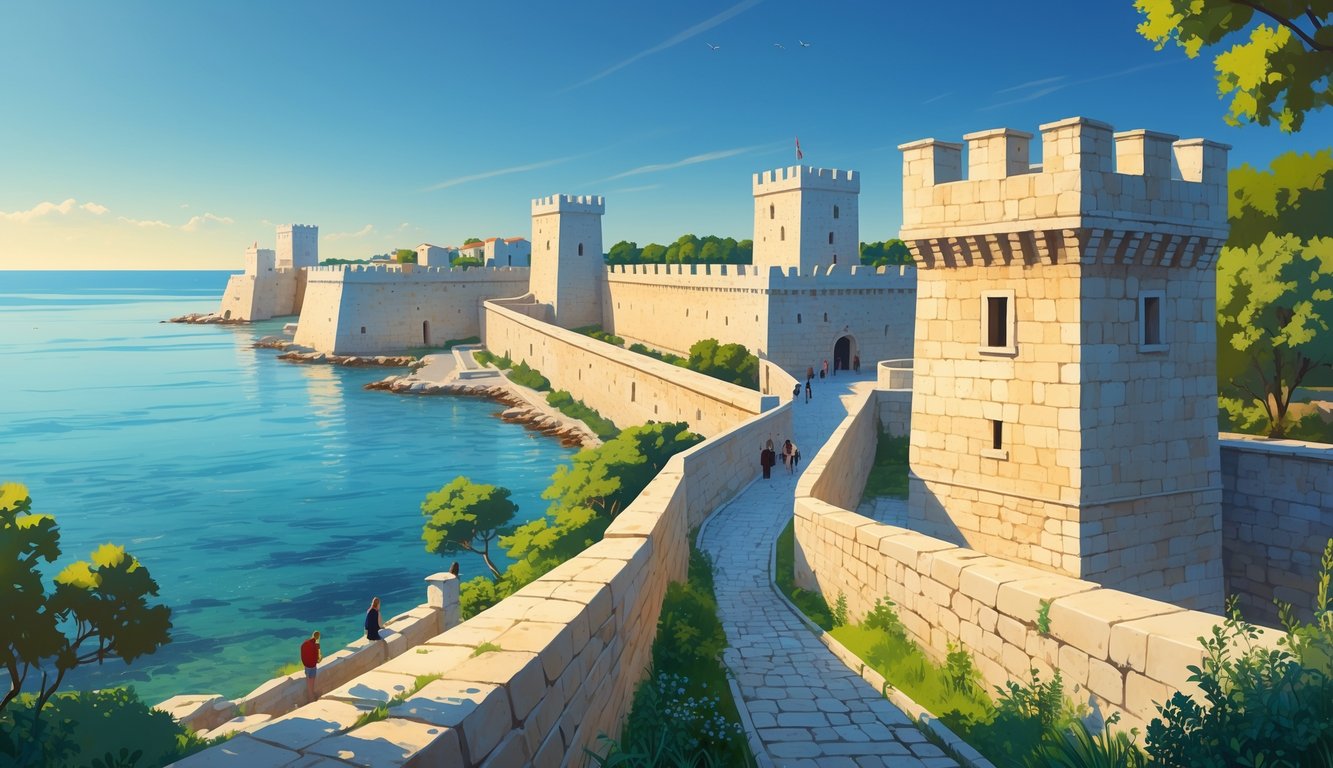
Zadar’s city walls form one of the most recognizable landmarks on Croatia’s Adriatic coast.
Built mainly in the 12th and 13th centuries and later strengthened by the Venetians in the 16th century, these fortifications guarded the city against invasions from sea and land.
Today, they stand as a UNESCO World Heritage Site and an enduring record of medieval urban planning.
Walking along the restored Muraj Promenade, visitors can follow the same route once used by guards and watchmen. The path offers sweeping views of the port and the Adriatic, allowing a quiet appreciation of how the city and sea have shaped one another over centuries. Several notable gates punctuate the walls, including the Land Gate, marked by the Venetian lion emblem, and the Sea Gate, which opens toward the waterfront.
Near the northern section, a few defense towers remain integrated into the structure, their stonework revealing layers of historical reconstruction. Informational plaques along the route outline key periods of restoration, particularly the revitalization efforts completed in 2020 with European Union support.
Many travelers pause at sunset to watch the light shift over the ancient masonry; it lends the site an atmosphere both solemn and peaceful. Exploring the walls takes about an hour at a relaxed pace, but it can easily extend longer for those interested in photography or historic detail. The experience connects visitors with the centuries of defense and resilience that helped shape Zadar’s identity.
10. Attend a cultural event at the City Museum
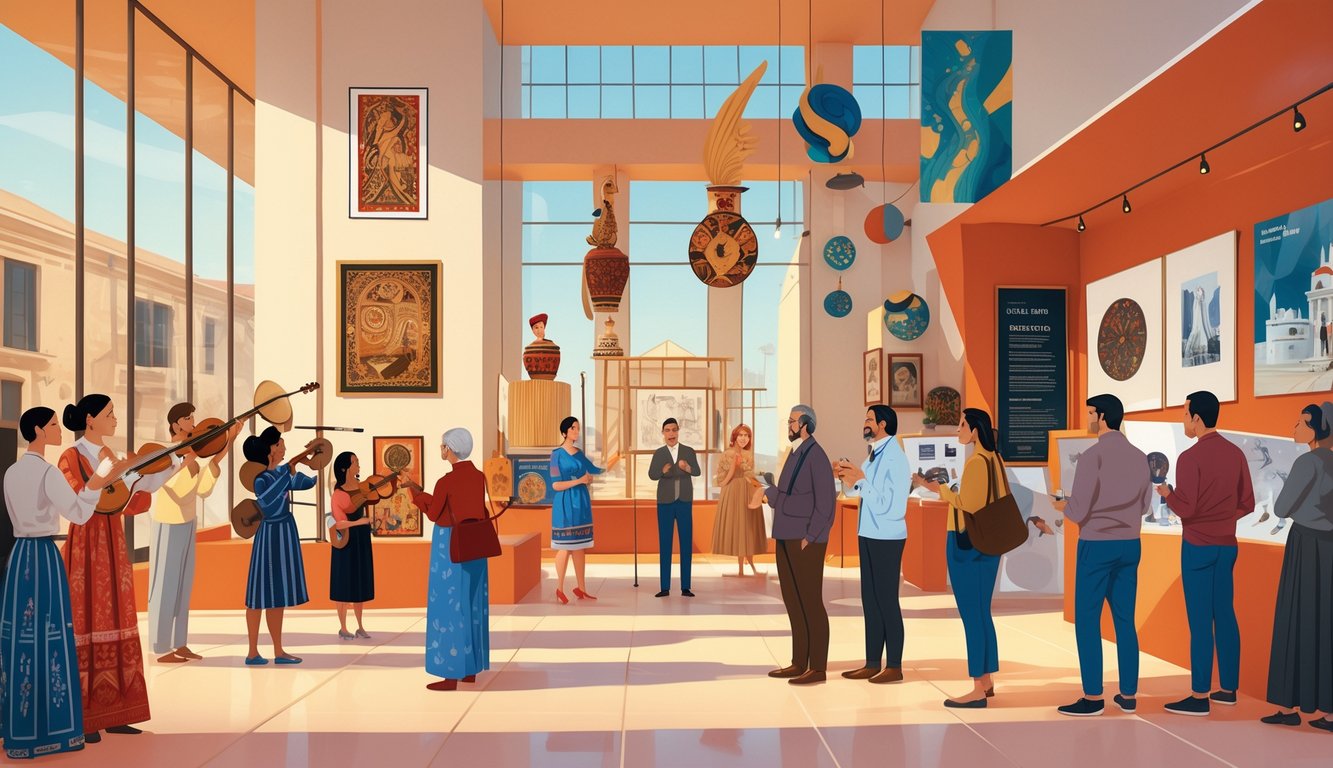
The City Museum of Zadar preserves and presents the region’s artistic and historical heritage. Located in a former noble residence near the Old Town, the museum regularly organizes cultural events that highlight the city’s creative life. These occasions often blend exhibitions, lectures, and live performances.
Visitors can attend an art opening featuring local painters or photographers, followed by discussions with the artists. Occasionally, the museum hosts concerts and traditional music evenings inside its courtyard, creating an intimate atmosphere where history meets contemporary expression. The carefully curated programs appeal to both locals and travelers interested in understanding Zadar’s identity beyond its monuments.
Those visiting during major city festivals, such as the Night of the Museums, will find the museum open late with special guided tours and community gatherings. This event transforms the museum into a meeting point for cultural exchange, allowing participants to experience Zadar through sound, light, and dialogue.
Attending a cultural event here offers more than entertainment—it provides insight into how the city values preservation and creativity. Each program connects the past with the present, offering a direct encounter with Zadar’s evolving cultural landscape.
11. Relax at Kolovare Beach
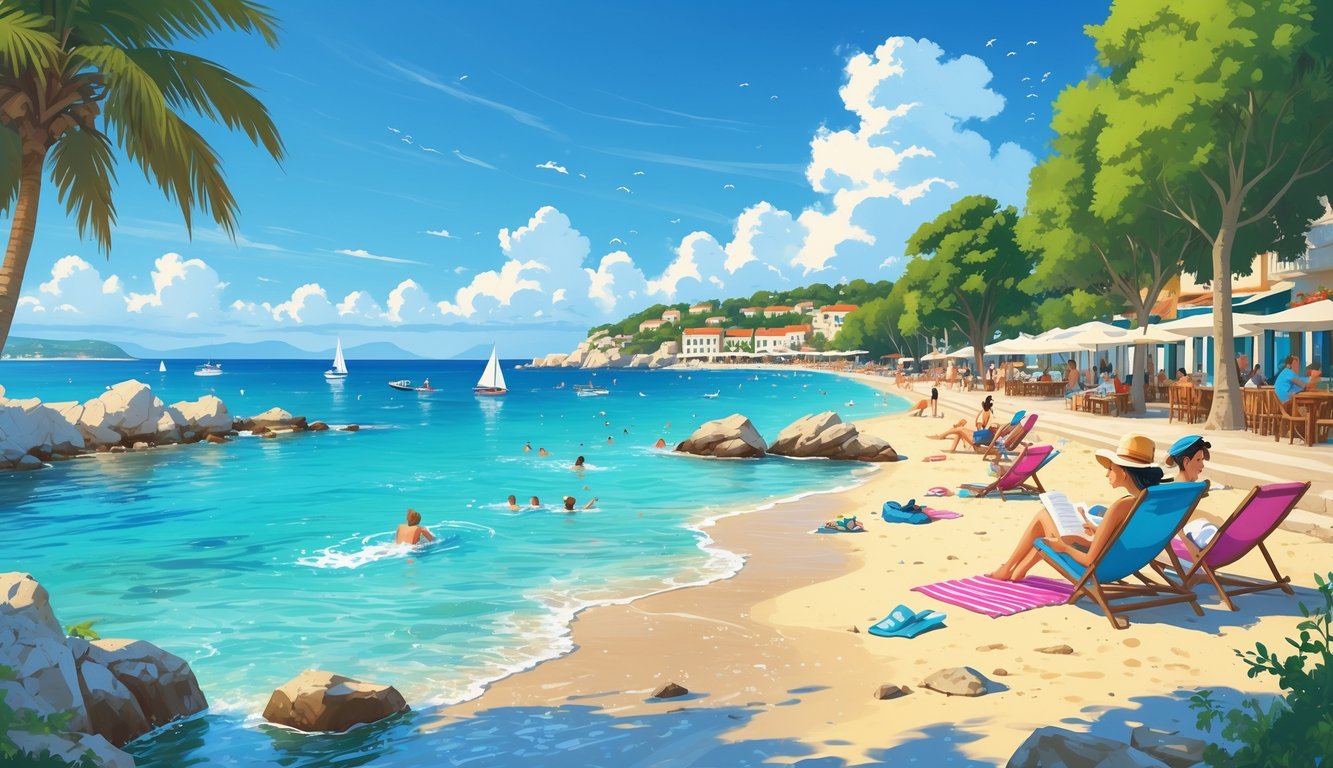
Kolovare Beach, located just a short walk from Zadar’s Old Town, offers a calm escape from the busy city streets. Its Blue Flag status marks it as a clean and safe swimming area, ideal for visitors who value comfort and order. The beach features both pebbled and sandy areas, making it suitable for lounging, walking, or entering the water easily.
Visitors often choose Kolovare for its convenient facilities. Changing rooms, showers, and nearby cafés provide everything needed for a full day by the sea. Families appreciate the shaded green spaces, while couples prefer the quieter corners near the edge of the promenade.
The water here remains clear most of the year, encouraging swimming and snorkeling. For those who want something more active, local vendors rent out kayaks and pedal boats for exploring Zadar’s coast. Lifeguards operate during the high season, offering an added sense of safety for all ages.
When hunger strikes, the cafés and restaurants lining the waterfront serve fresh seafood and cool drinks at reasonable prices. The view of the Adriatic, particularly during sunset, turns a simple meal into a pleasant experience. Kolovare’s proximity to the city center allows visitors to easily transition from sunbathing to evening walks along Zadar’s historic streets.
12. Take a boat trip to the nearby Kornati National Park
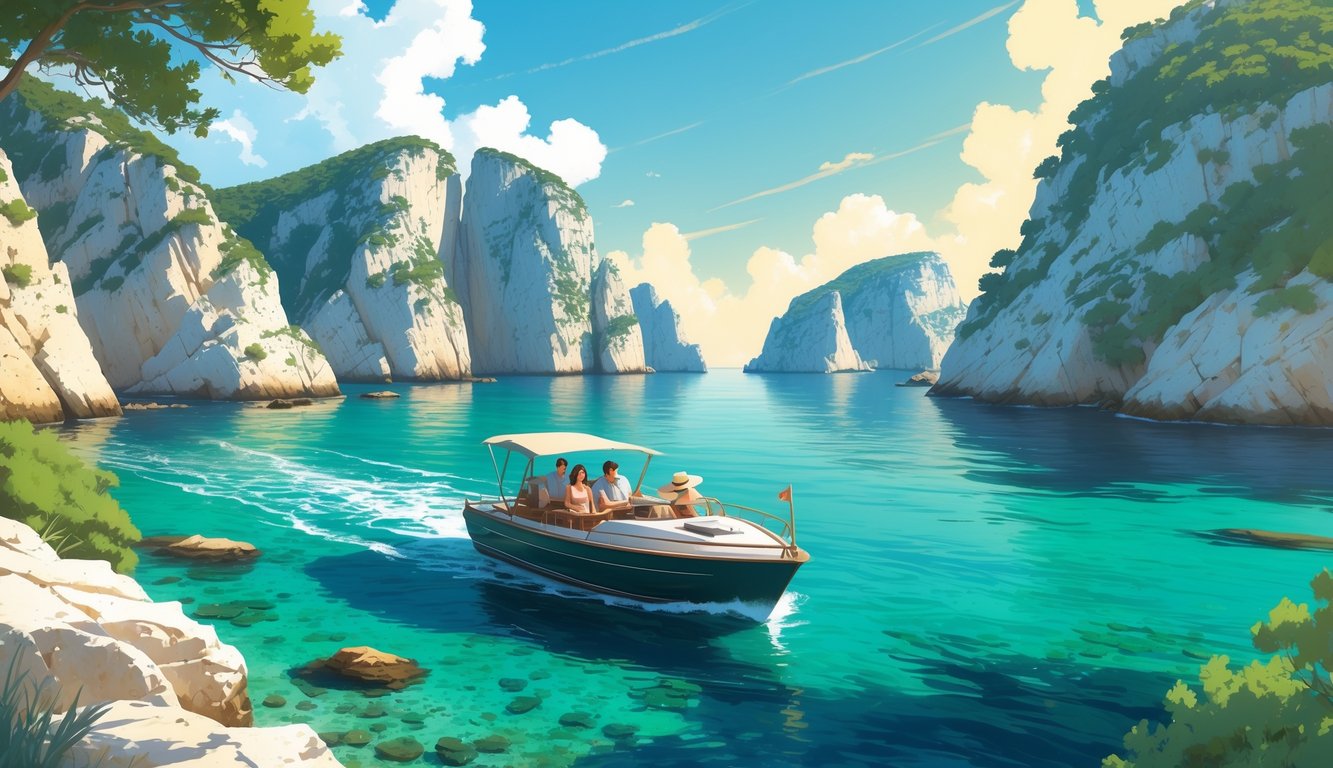
A short boat ride from Zadar opens the way to Kornati National Park, a cluster of more than 150 islands and reefs scattered across the Adriatic. The archipelago lies about 15 nautical miles from the city and is known for its clear waters, limestone cliffs, and quiet coves.
Many tours depart directly from Zadar’s marinas, often early in the morning. A typical full‑day trip lasts around ten hours and includes stops for swimming, snorkeling, and short island walks. Some cruises also visit Telašćica Nature Park on nearby Dugi Otok, giving visitors a chance to see salt lakes and dramatic sea cliffs.
Lunch is commonly served on board—usually simple grilled fish and local wine. Travelers can choose between large group boats, smaller speedboats, or private charters depending on comfort and budget. Prices generally start around fifty euros per person for group excursions.
The Kornati islands remain largely uninhabited, which makes them ideal for those who appreciate calm, natural settings. Bringing a swimsuit, sun protection, and sturdy shoes is recommended since the terrain is rocky and shade is limited.
For visitors seeking a slower pace, sailing trips allow more time to explore hidden bays or enjoy the seclusion of Lojena Beach. Whether aboard a wooden cruiser or a modern yacht, a day among the Kornati islands offers a quiet contrast to Zadar’s lively streets and a closer view of Croatia’s coastal landscape.
13. Visit the Museum of Ancient Glass
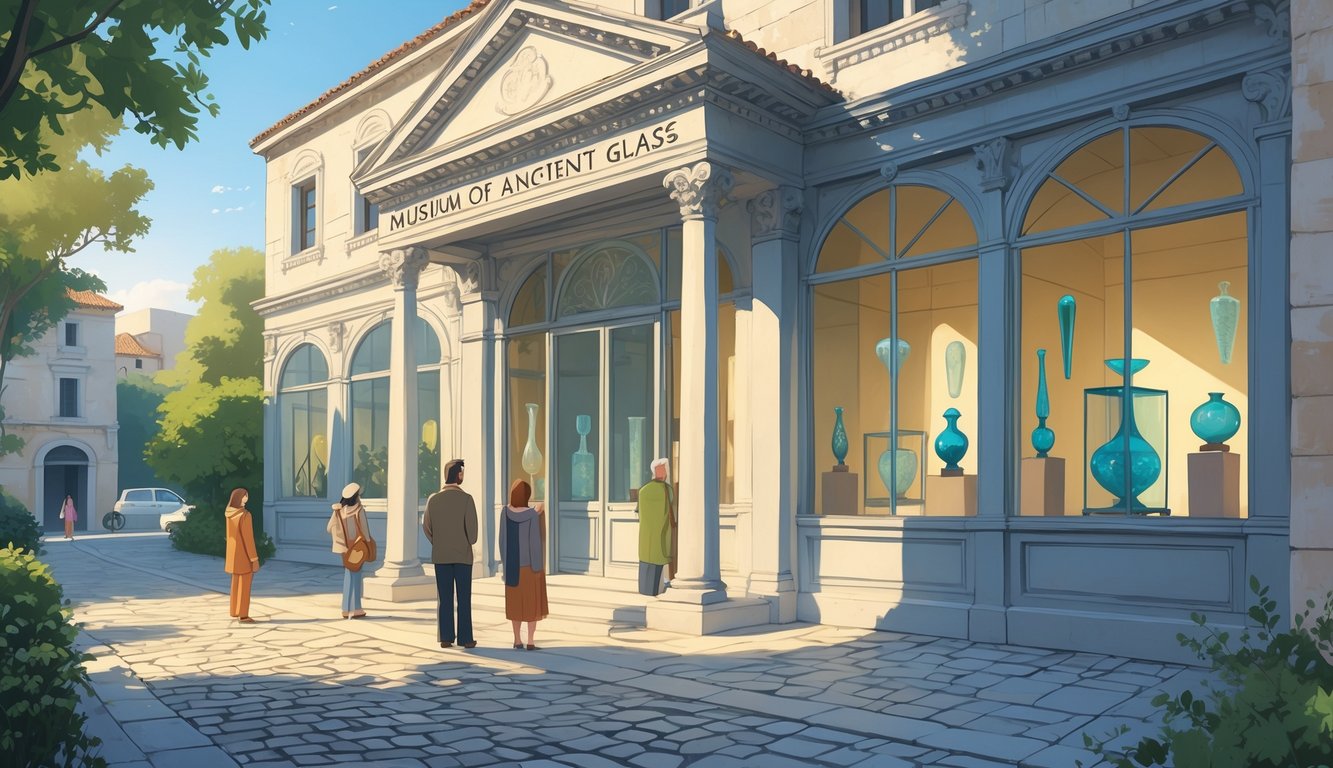
Set in the historic Cosmacendi Palace near Zadar’s old harbor, the Museum of Ancient Glass preserves one of the most specialized collections in Europe. Its more than 5,000 artifacts date from the 1st century BC to the 5th century AD, showcasing the craftsmanship of ancient Mediterranean glassmakers. Each object reveals how glass moved from luxury to everyday use across centuries.
Visitors can walk through galleries filled with Roman glass vessels, jewelry, and decorative pieces found in nearby archaeological sites. The lighting and display methods highlight the fine details of the pieces without excessive ornamentation, keeping the focus on the materials and techniques. The main exhibition occupies the first floor, while the second floor focuses on production methods.
Live demonstrations bring historical techniques to life. Local artisans often show traditional glassblowing and bead making, giving context to what’s displayed behind the glass cases. It’s both an educational and sensory experience—the faint heat from the furnace and the careful rhythm of glass shaping create a sense of continuity between past and present.
From the museum’s windows, views extend over Jazine Harbor, adding a calm visual counterpoint to the intricate artifacts inside. Whether staying briefly or spending a quiet hour studying details, visitors encounter a clear connection between archaeological history and living craftsmanship, all rooted in the heart of Zadar.
14. Explore the Greeting to the Sun installation
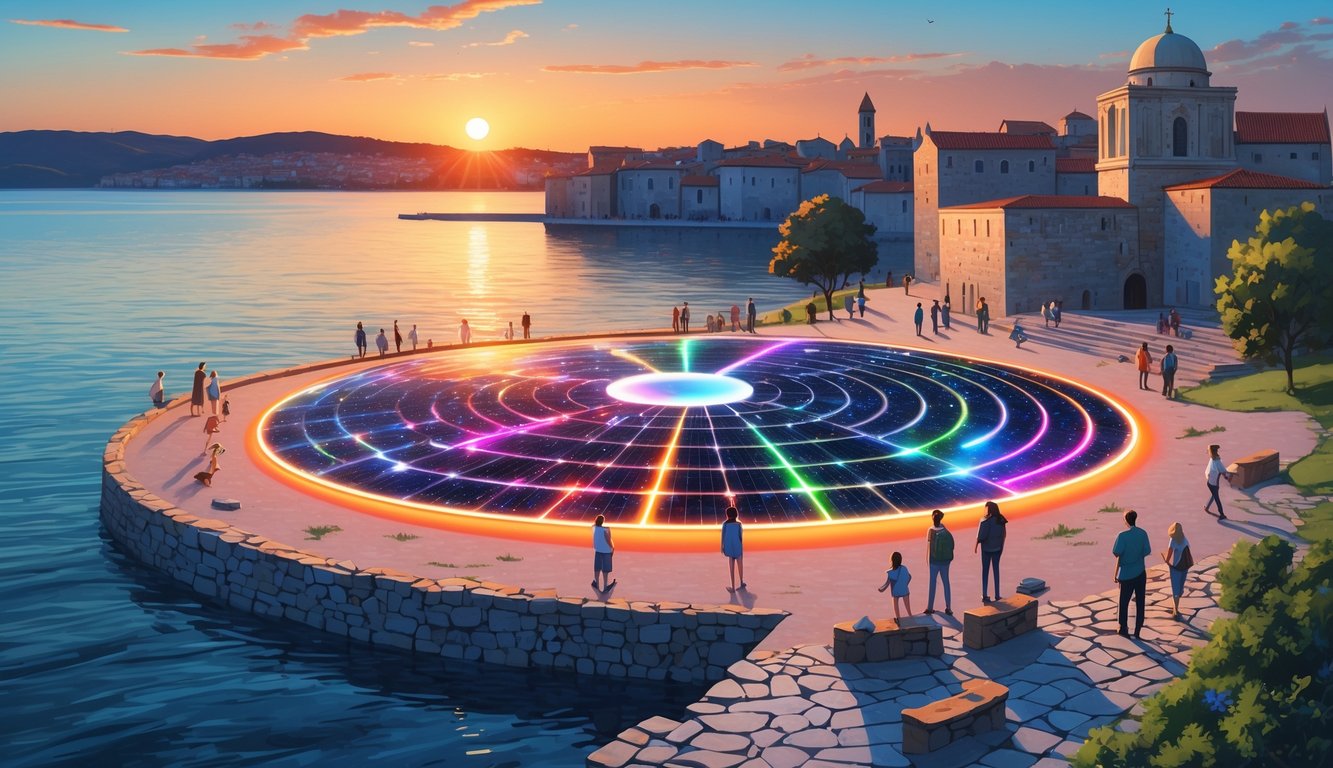
At the edge of Zadar’s peninsula lies the Greeting to the Sun, a circular installation that combines technology, art, and the natural rhythm of the coast. Designed by architect Nikola Bašić, it consists of 300 glass panels set into the stone near the waterfront. Each panel contains solar cells that absorb sunlight during the day.
As daylight fades, the stored energy powers an intricate display of colored lights. The surface glows in shifting patterns that mirror the movement of the sea and sky. Visitors often gather here at dusk to watch the mosaic come alive beside the soft notes of the nearby Sea Organ.
Spanning 22 meters in diameter, the installation is both modern and symbolic. It reflects the city’s relationship with the sun and sea, connecting the urban promenade to the natural forces that shape Dalmatia. The experience changes with the time of evening, the crowd, and even the weather.
It has become one of Zadar’s defining landmarks, balancing contemporary design with a quiet respect for the scenery around it. Watching the lights pulse beneath one’s feet offers a simple but lasting impression—a rare blend of art and environment that invites calm observation rather than spectacle.
15. Wander through the Central Market
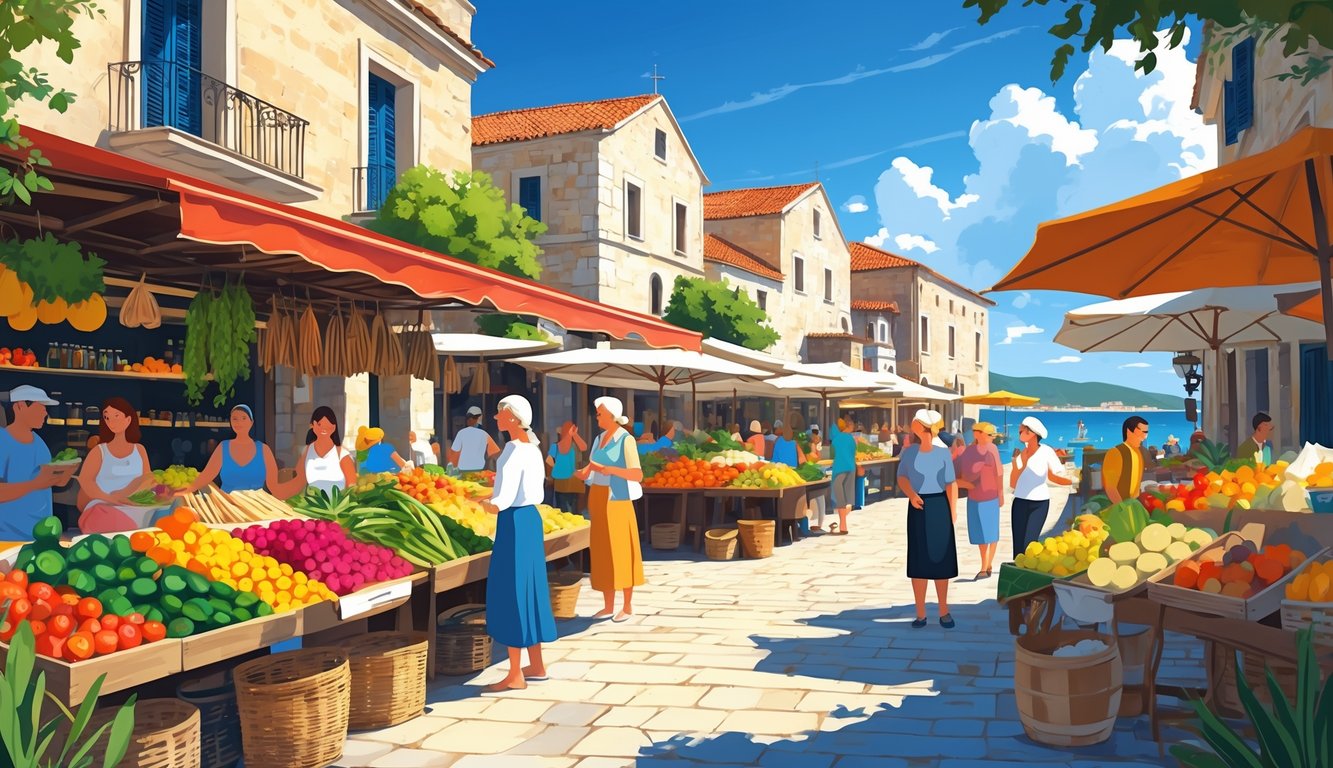
Zadar’s Central Market sits just steps from the Old Town’s ancient walls, drawing both locals and visitors each morning. The air carries the scent of fresh herbs, sea salt, and ripe fruit. Early hours are lively, with vendors loudly greeting familiar faces while arranging olives, figs, and local cheeses in neat displays.
This market has supplied residents with produce for generations. Farmers from nearby villages still arrive at dawn with baskets full of seasonal goods—often grown in small family gardens. Many stalls sell homemade olive oil, dried Dalmatian herbs, and honey from the surrounding countryside, giving travelers a glimpse of daily life in the region.
Visitors can also find fishmongers selling freshly caught Adriatic fish, their counters gleaming with silver sardines and squid. It’s common to see locals bargaining casually over prices or sharing short conversations about weather and harvests.
Beyond the food stands, the covered section holds a mix of regional wines, cured meats, and handmade crafts. Taking time to chat with the stallholders can reveal useful suggestions on what to cook or where to eat nearby. A short stop for a coffee at a nearby café completes the experience, offering a quiet view of the bustle just a few steps away.
Exploring the Central Market doesn’t require a plan—it unfolds naturally through simple curiosity. Whether someone buys a piece of fruit or simply observes, it offers an honest connection to Zadar’s everyday rhythm.
16. Tour the Church of St. Mary
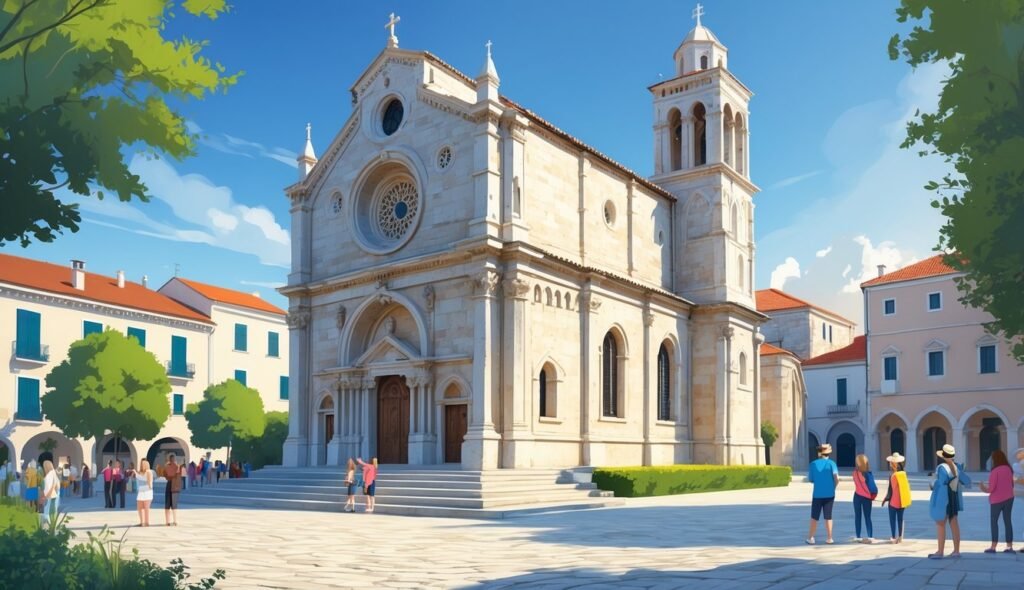
The Church of St. Mary stands as one of Zadar’s most significant religious landmarks. Founded in 1066 by the noblewoman Čika, it reflects the city’s strong medieval heritage. The adjacent Benedictine Monastery, still active today, adds a layer of continuity that links modern Zadar to its early Christian roots.
Visitors often notice the Romanesque bell tower first. Its clean, proportional lines and centuries-old stonework reveal the craftsmanship typical of Dalmatian architecture. The three-nave layout of the church, built in 1091, holds both simplicity and harmony in its design, which historians describe as a hallmark of early Croatian ecclesiastical construction.
Inside, the Permanent Exhibition of Religious Art—often called “The Gold and Silver of Zadar”—presents over two hundred artifacts. These include reliquaries, ornate chalices, and medieval manuscripts that span nearly a thousand years of religious history. The exhibition is housed within the monastery walls, allowing visitors to experience both spiritual and artistic legacies in one place.
The setting is peaceful, and the atmosphere differs markedly from the city’s coastal bustle. Tourists and scholars alike often remark on how the subdued lighting and quiet cloisters evoke reflection. For those interested in history or sacred art, St. Mary’s offers a thoughtful look at how faith and culture shaped Zadar over the centuries.
17. Enjoy panoramic views from the National Park Paklenica
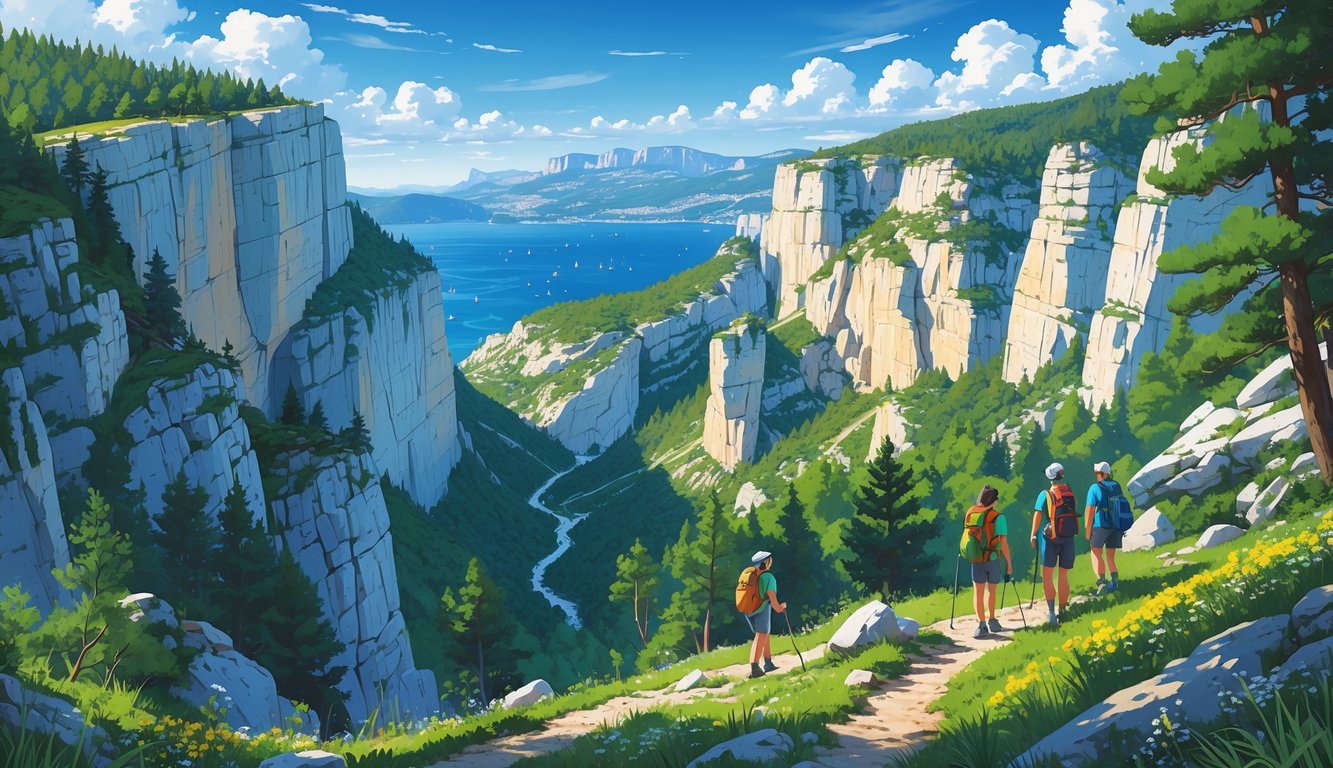
Located in the southern Velebit Mountains, Paklenica National Park offers some of Croatia’s most striking landscapes. Just a short drive northeast of Zadar, it’s an ideal day trip for anyone who wants to trade the coast for rugged mountain scenery. The park covers over 95 square kilometers, filled with limestone cliffs, forest trails, and hidden caves.
Visitors can take in sweeping views from the peaks of Vaganski vrh and Sveto Brdo. Vaganski vrh, standing at 1,757 meters, is the highest point of the park and the Velebit range. On clear days, the Adriatic Sea and nearby islands spread out below like a detailed map. The climb is steep but well-marked, attracting both serious hikers and those looking for a rewarding challenge.
Velika and Mala Paklenica canyons cut deep through the park, offering cooler air and dramatic cliffs that rise more than 400 meters high. Several viewpoints along the trails allow visitors to pause and observe falcons circling overhead or the dense beech forests that blanket the slopes.
For those who prefer an easier route, trails such as Premužić’s Path provide access to stunning vistas without demanding climbs. This historic stone trail winds gently through the park, revealing changing views of the mountains and sea. Whether hiking to the summit or walking along calmer paths, the park delivers serene panoramas that capture the natural beauty of Croatia’s interior.
18. Taste local Dalmatian cuisine in traditional konobas
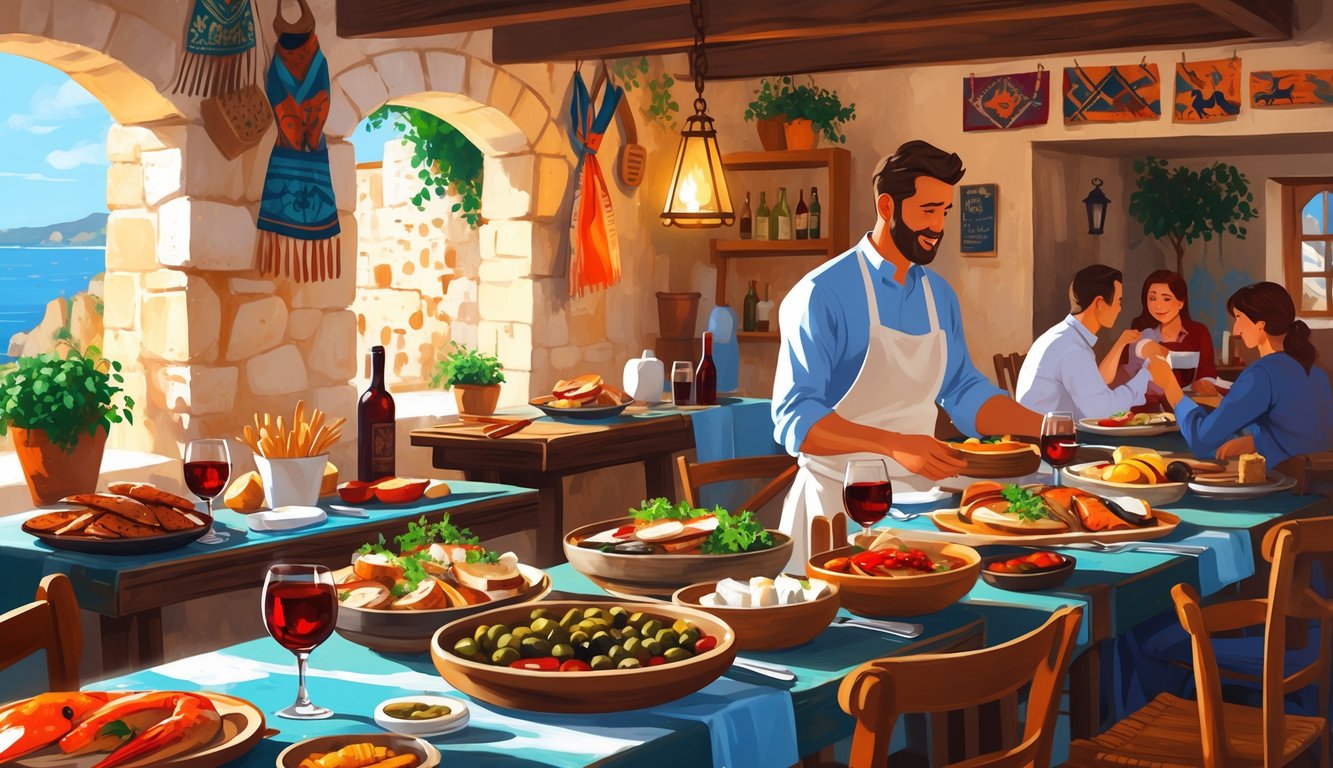
Dalmatian cuisine reflects the Adriatic coast’s simple yet refined flavors. In Zadar, traditional taverns known as konobaspreserve this heritage. They serve dishes rooted in local ingredients—olive oil, fresh seafood, and seasonal vegetables—prepared with modest skill rather than excess.
Visitors often start with marinated anchovies or octopus salad before moving to grilled fish, slow-cooked beef pašticada, or handmade pasta with seafood. Each dish demonstrates the region’s balance between land and sea, a hallmark of Mediterranean cooking. The flavors are fresh and light, emphasizing quality ingredients over heavy sauces.
Notable establishments such as Konoba Skoblar, Konoba Dalmatina, and Konoba Dalmacija offer a glimpse into authentic local dining. Their menus include traditional recipes that have been passed down for generations, often paired with regional wines like Plavac Mali or Pošip. Prices remain fair for the quality, making these venues accessible for both locals and travelers.
A meal in a konoba is never rushed. Meals are social occasions where conversation flows as freely as the wine. Wooden interiors, stone walls, and calm ambient music create a comfortable setting. For those wishing to experience Zadar’s gastronomic identity, dining in a konoba provides a clear window into its culture—unpretentious, grounded, and built on tradition.
19. Rent a bike and ride along the coastline
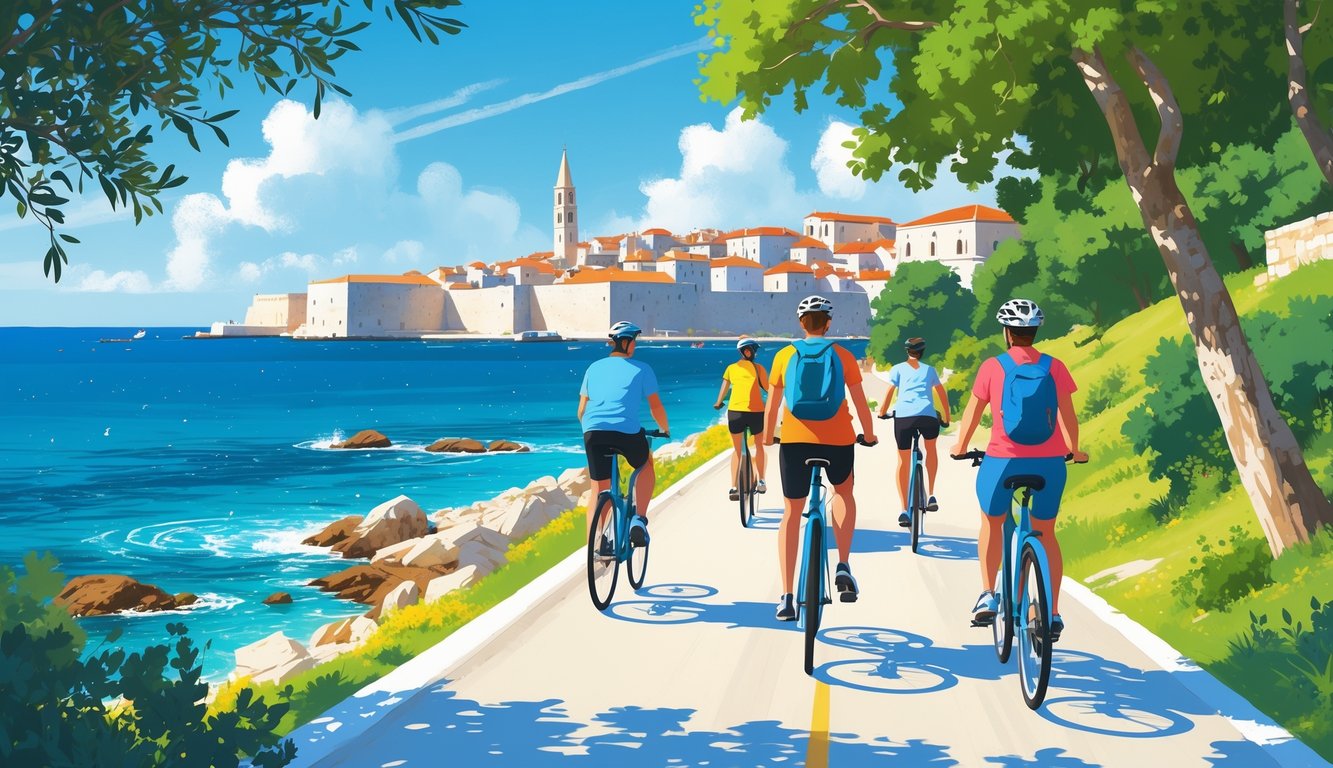
Cycling through Zadar allows visitors to see the city at a slower, more enjoyable pace. The terrain is mostly flat, which makes it suitable for both experienced riders and casual cyclists. Rental shops are easy to find in the Old Town and along the waterfront, offering regular and electric bikes for daily or hourly use.
Starting near the Sea Organ, riders can follow the coastal path that borders the Adriatic. The route passes marinas, fishing boats, and shaded promenades lined with palm trees. The air carries a faint salt scent, and the soft hum of waves is a constant companion.
Those who continue south toward Bibinje or north toward Diklo see a changing mix of beaches, local cafés, and quiet neighborhoods. It’s common to stop for a short swim or a coffee with a sea view. Many rental services even deliver bikes directly to hotels or apartments, saving time and effort.
Guided tours are another good option for visitors who prefer a curated route. These tours often include key landmarks, short cultural stops, and recommendations for local meals. Whether self-guided or organized, cycling along Zadar’s coast connects travelers to the city’s rhythm—unhurried, scenic, and deeply tied to the Adriatic landscape.
20. Experience the Annual Zadar Summer Theatre Festival
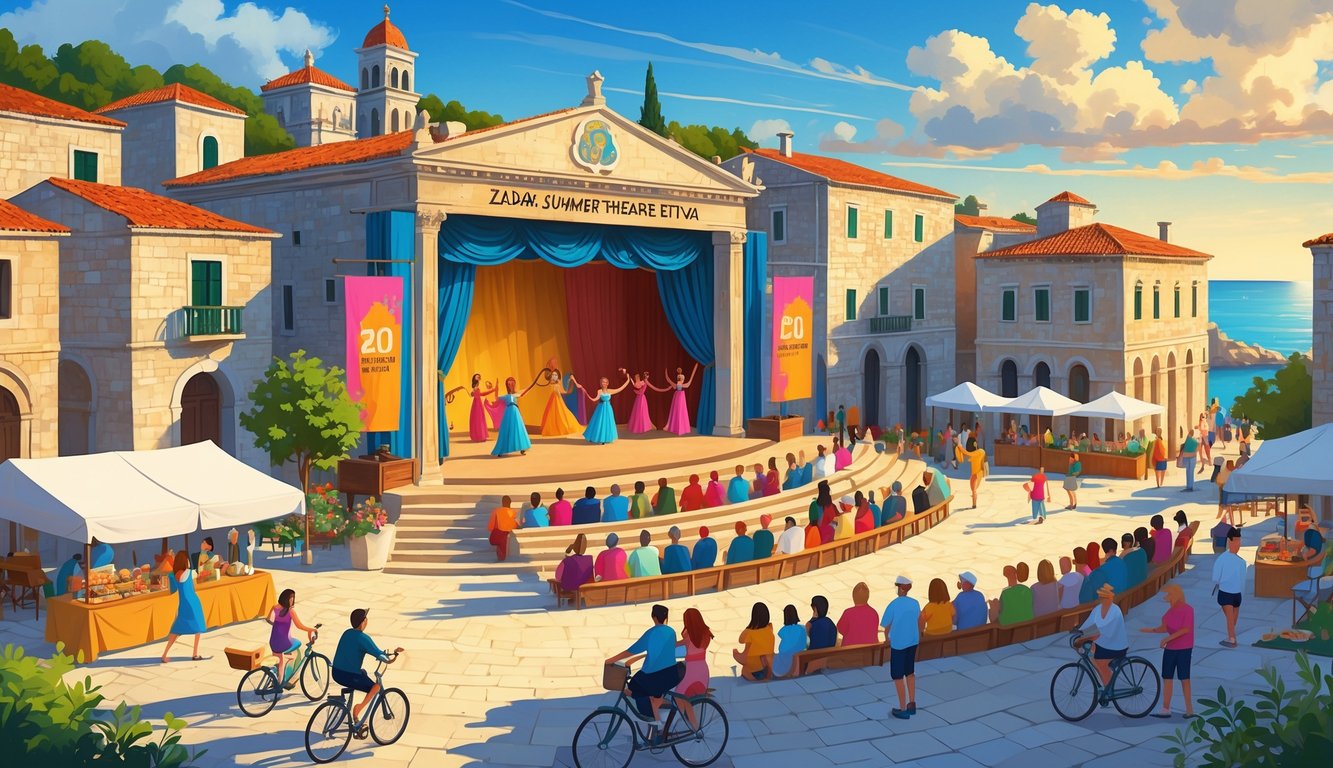
Each summer, Zadar transforms into a citywide stage for the Zadar Summer Theatre Festival. Established in 1995, this event showcases Croatian and international theatre groups performing across the city’s open-air venues. The focus often leans toward comedy, though the lineup includes a variety of genres that highlight both local creativity and broader theatrical traditions.
The festival spans several weeks, filling Zadar’s historic streets, courtyards, and landmarks with performances after sunset. The use of open spaces—whether near the Roman Forum or the city’s stone squares—creates a sense of connection between the plays and the city’s ancient character. Visitors can move easily from one location to another, taking in both art and architecture in a single evening.
The Croatian National Theatre in Zadar plays a leading role in organizing the festival, bringing together professional actors and guest ensembles. Locals attend regularly, but the event also draws many travelers who plan their trip around the program. Watching theatre under the Adriatic night sky gives visitors a perspective on Zadar that goes beyond its beaches and monuments.
Tickets are usually affordable, and some performances are free, making the festival accessible to a wide audience. Attendees experience not only entertainment but also the city’s dedication to cultural continuity. For anyone visiting in July or August, this festival offers a memorable way to engage with Zadar’s living heritage.
Planning Your Visit to Zadar
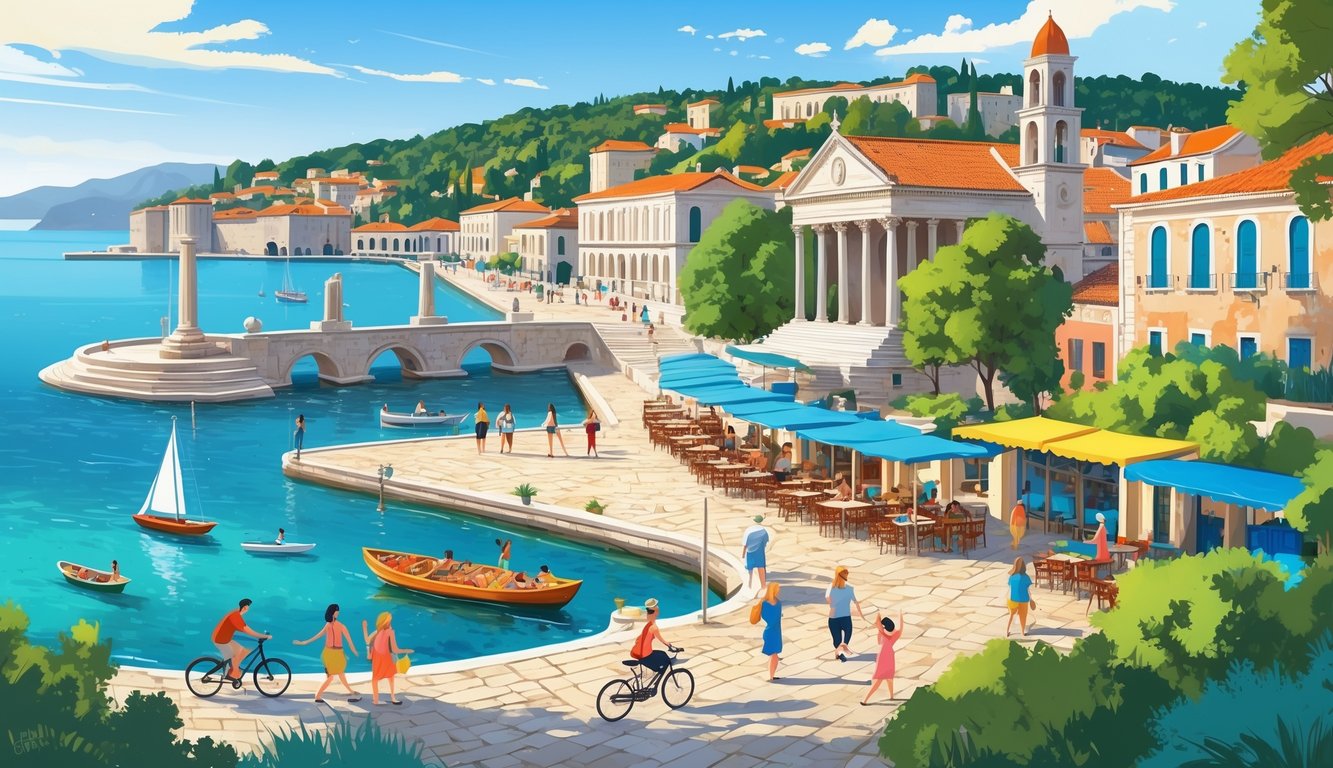
Visitors often plan their time in Zadar based on the weather, crowds, and how easily they can explore the city. Knowing when to go and how to move around helps make the most of every day, whether they want beaches, history, or quiet walks along the waterfront.
Best Time to Visit
Zadar experiences a typical Adriatic climate, with hot summers and mild winters. The most comfortable time to visit is from May to early October, when the sea is warm enough for swimming and outdoor cafés stay open late. July and August bring lively festivals, open-air concerts, and the busiest crowds—perfect for travelers who enjoy energy and nightlife.
Those seeking calmer streets should consider April, May, or September. During these months, temperatures average between 20°C and 26°C (68°F–79°F), and major landmarks like the Roman Forum and St. Donatus Church are easier to access without long waits.
Rain is most common from November through March, though even in winter, Zadar rarely feels dull. Off-season visitors find lower prices on accommodation and more interaction with locals.
| Season | Average Temperature | Highlights |
|---|---|---|
| Spring (Apr–Jun) | 18–25°C | Blooming trails in Paklenica National Park |
| Summer (Jul–Aug) | 27–32°C | Beach life, Sea Organ at sunset |
| Autumn (Sep–Oct) | 20–26°C | Warm sea, fewer tourists |
| Winter (Nov–Mar) | 10–15°C | Quiet streets, lower hotel rates |
Getting Around the City
Zadar’s compact layout allows easy exploration on foot, especially inside the historic peninsula. Most main attractions—the Sea Organ, the Greeting to the Sun, and the Cathedral of St. Anastasia—sit within walking distance of each other. Comfortable shoes make all the difference on polished stone streets.
The local bus network, operated by Liburnija, connects the old town with neighborhoods, beaches, and the airport. Tickets can be purchased at kiosks or directly from the driver for a few euros. Taxis and ride-share services are available but less common within the old town’s narrow lanes.
For day trips to nearby islands or coastal towns like Nin or Pag, travelers often rent a car or take ferries from the Zadar Ferry Port. Car rental is ideal for exploring secluded beaches or national parks such as Krka and Paklenica. Cycling is another good option; bike rentals are popular near the waterfront and help visitors enjoy seafront paths at their own pace.
Cultural Insights and Local Experiences
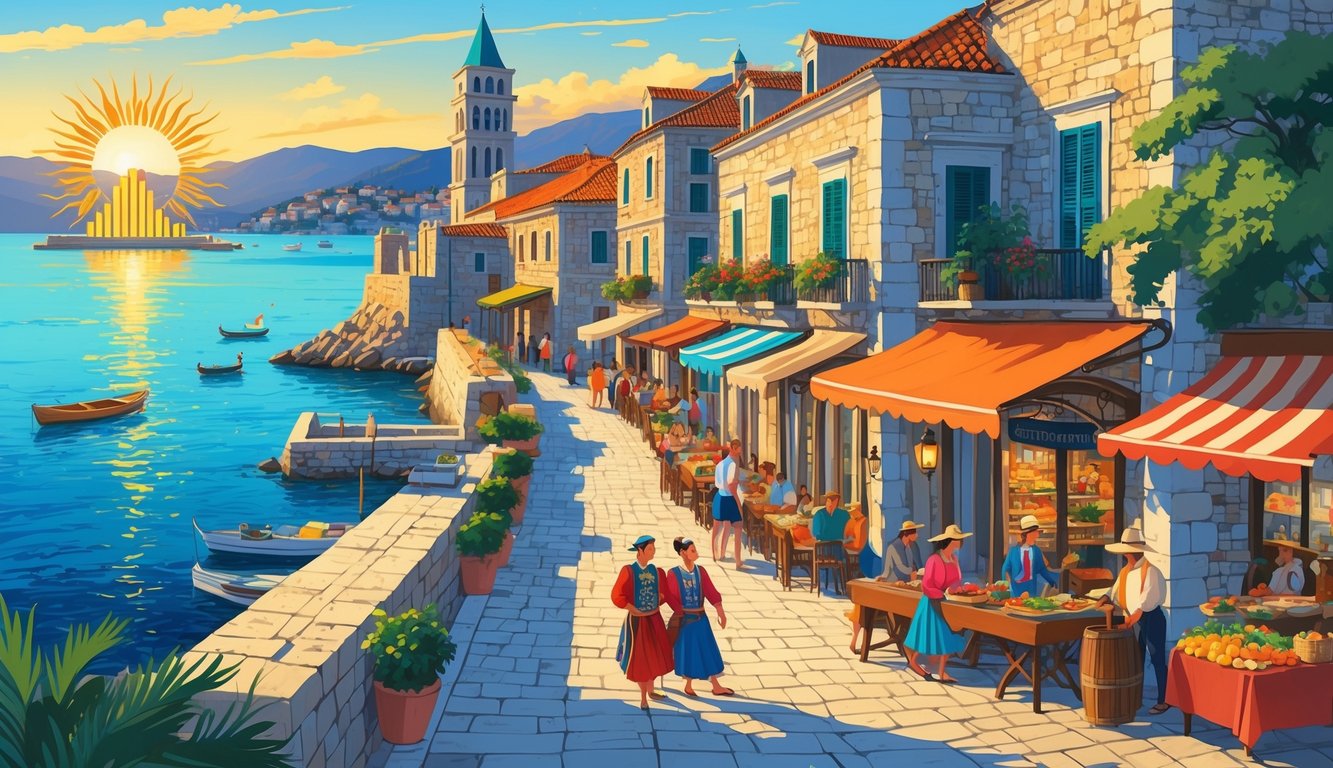
Zadar’s rhythm comes alive in its markets, cafés, and quiet coastal corners. At Tržnica Zadar, locals buy fresh figs, cheese from Pag Island, and olive oil straight from nearby farms. Early mornings here reveal more than produce—they reveal community. Vendors greet regulars by name, and visitors quickly notice how central this space is to daily life.
The city’s historic center blends ancient foundations with modern art. The Museum of Ancient Glass displays delicate Roman pieces made here centuries ago. A short walk away, the Sea Organ and Greeting to the Sun installations show how contemporary design connects with nature and sound. Standing there, one hears the Adriatic compose its own music against marble steps.
Cafés form the social fabric of Zadar. Locals often linger over espresso on Kalelarga Street, discussing sports, politics, or the weather. Service moves at a relaxed pace, reflecting Croatia’s “polako” lifestyle—slow down and enjoy the moment.
| Experience | What to Expect |
|---|---|
| Local Market Visit | Fresh produce, friendly exchanges, and a look into daily routines. |
| Traditional Konoba (Tavern) | Homemade seafood stew, local wine, and simple but hearty meals. |
| Evening on the Promenade | Families strolling, buskers performing, sea breeze cooling the air. |
Zadar’s culture rests not in grand shows but in small, steady traditions. Observing the interaction between sea, people, and heritage offers a quiet but lasting impression of Croatian coastal life.
Frequently Asked Questions
Visitors often ask about Zadar’s most memorable landmarks, outdoor adventures, and cultural highlights. The city offers ancient history and contemporary attractions side by side, providing something worthwhile for every traveler.
What are the top attractions to visit in Zadar?
Zadar’s best-known sights include the Sea Organ, which plays music through sea waves, and the Sun Salutation, a solar-powered light installation that glows after sunset. Many also visit St. Donatus Church for its distinctive circular shape and the Roman Forum, a reminder of the city’s long history.
Can you recommend activities for families with children in Zadar?
Families often enjoy relaxing by the seafront promenade known as the Riva, where children can safely play while adults enjoy the view. The Sea Organ and Sun Salutation appeal to visitors of all ages, while boat rides to nearby islands give families a peaceful day outdoors. Small local museums and the city park near Queen Jelena Madije Park also provide kid-friendly activities.
What are some unique experiences to have in Zadar?
Listening to the Sea Organ at sunset is unlike anything else in Europe. Watching the Sun Salutation come alive with shifting colors after dark is another hallmark experience. For something different, travelers can explore local markets in the morning or take a short trip to Kornati National Park for island scenery.
What should one not miss in Zadar’s Old Town?
The Old Town, set on a small peninsula, holds Roman ruins, medieval churches, and Venetian architecture. The area is compact, so visitors can easily walk its marble streets and explore key landmarks such as St. Donatus Church and the Cathedral of St. Anastasia. Cafés and small shops along narrow alleys add to its charm and sense of authenticity.
What are the best outdoor activities in Zadar?
Zadar’s coastline invites walking, cycling, and swimming, particularly along the Riva or Kolovare Beach. Sailing excursions to nearby islands like Ugljan or Dugi Otok are popular with travelers seeking clear waters and quiet coves. Many also hike in Paklenica National Park, located less than an hour away.
Where can I find the best cultural experiences in Zadar?
Cultural experiences include visiting the Archaeological Museum for Roman artifacts and attending summer performances at historic venues near the Forum. The city also hosts art installations and local festivals that highlight both traditional and contemporary Croatian culture. Churches, galleries, and live music along the waterfront further reflect Zadar’s creative spirit.